
The world is a complex place. From the intricacies of modern society to the inner workings of nature, the layers of complexity that make up our world are staggering. It has been the work of scientists for millennia to attempt the untangling of all the threads that compose our universe. Likewise, the result of their labor has been the revelation of new and unimagined layers of complexity surpassing all that had hitherto been known. Curiosity about the nature of the world and its workings is common to all mankind. From infancy we explore the world around us with our eyes, mouth, and hands, eager to understand it. However, as people grow, many are intimidated and stumped by the increasing levels of complexity that they are met with. The solution to this dilemma, however, is not to give up, but like many other issues, to simply take things one step at a time.
Utilizing a stepwise mentality when tackling problems has been my habit for much of my life. Realizing that thinking too far ahead needlessly stresses me out and sometimes paralyzes my productivity, I often choose to ignore all components of a task except for the first step. Every task can be broken up into steps and sub-steps of varying complexity. At any point in time the only one that needs attention is the next one.
Science and mathematics are often viewed as difficult and complex subjects, yet they like every other problem can be broken into steps and components. In my calculus classes, for instance, much of what was taught included rules, theorems, and identities. Though at first glance they seem like difficult subjects for memorization without much practical use, they are essentially pre-packaged steps which can be applied to simplify complex problems. They may seem difficult at first, but by focusing only on the next step, and then the one after that, they unravel themselves the way a cloth does when a loose thread is pulled. Dr. Obi-Johnson frequently demonstrated this type of stepwise process during her General Chemistry I (CHEM 111) lectures. For instance, when solving chemistry problems, the approach she taught breaks each problem into several distinct steps. First, one must summarize information — that is, one should take an inventory of relevant information given in the problem. Second, one must identify a relationship. This usually means finding an equation that relates the known variables (from step one) with the unknown variable one wishes to solve for. Thirdly, one should substitute the known values into the equation. And finally, one can then solve for the unknown. Thus, a relatively simple process can be used to simplify seemingly difficult chemistry problems.
The subject of our research has been the creation of in-class activities and games to boost student success in General Chemistry I (CHEM 111) classes. When I took the course, I noticed that many students struggled with it. Students who were getting As and Bs is other classes like biology were often getting Ds and Fs in CHEM 111. Assuming that chemistry problems with which students have difficulty solving can be broken into basic steps, it follows that it is one or more of the individual steps that caused them trouble. With this in mind, it was my idea to create activities and games that isolated and focused on the skills involved in each step of the processes students had trouble with.
I theorize that many problems that students encounter in classes like chemistry stem from a lack of experience with process driven learning versus memorization driven learning. A memorization driven learning method works fine so long as all students are required to do is to take in information and spit it back out during exams. However, this is ineffective when students are not required to simply remember a what but also a how. Exams in classes like chemistry, math, and physics don’t have answers students can simply memorize from a list. Rather, they present problems that must be solved by applying processes.

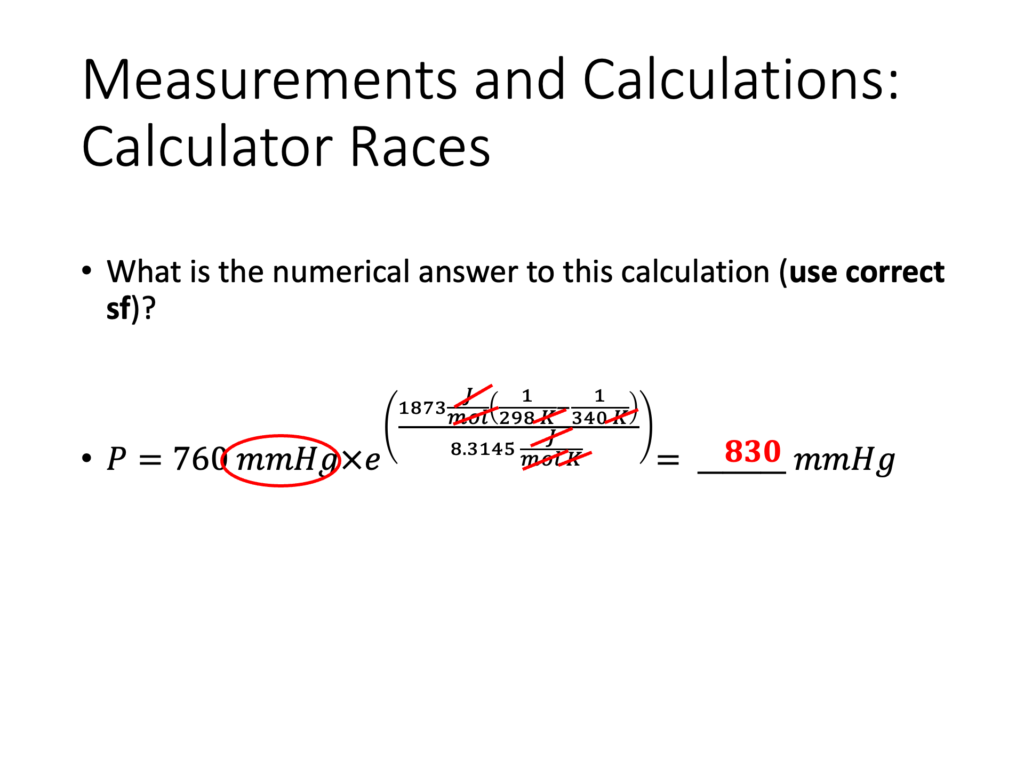

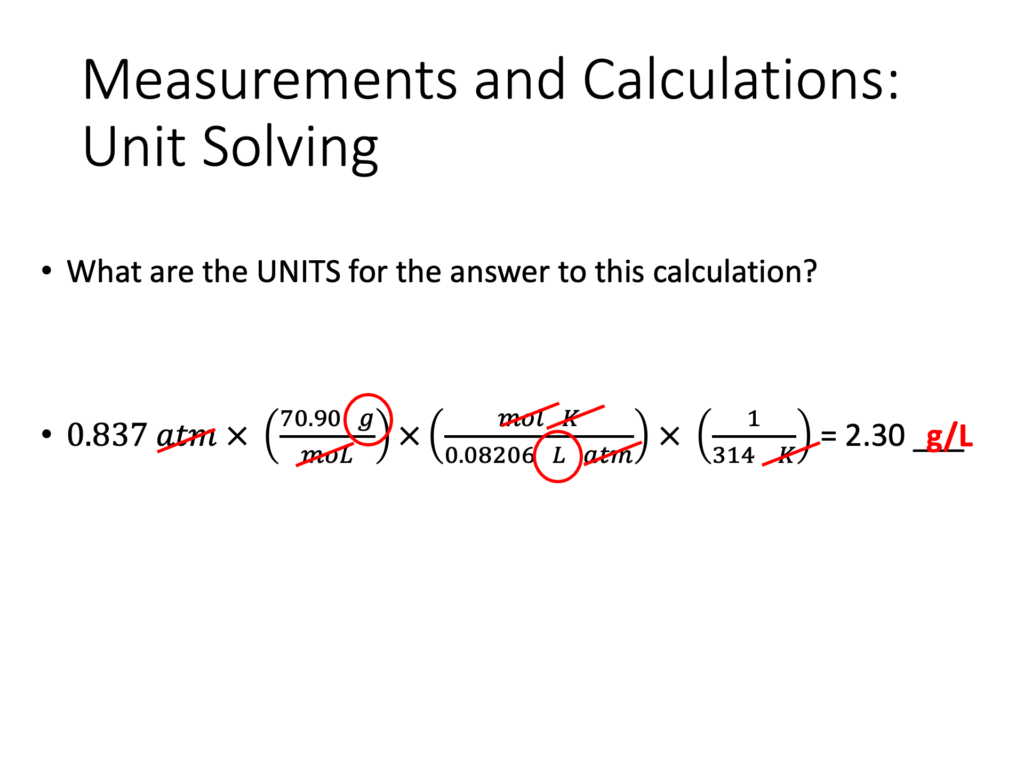
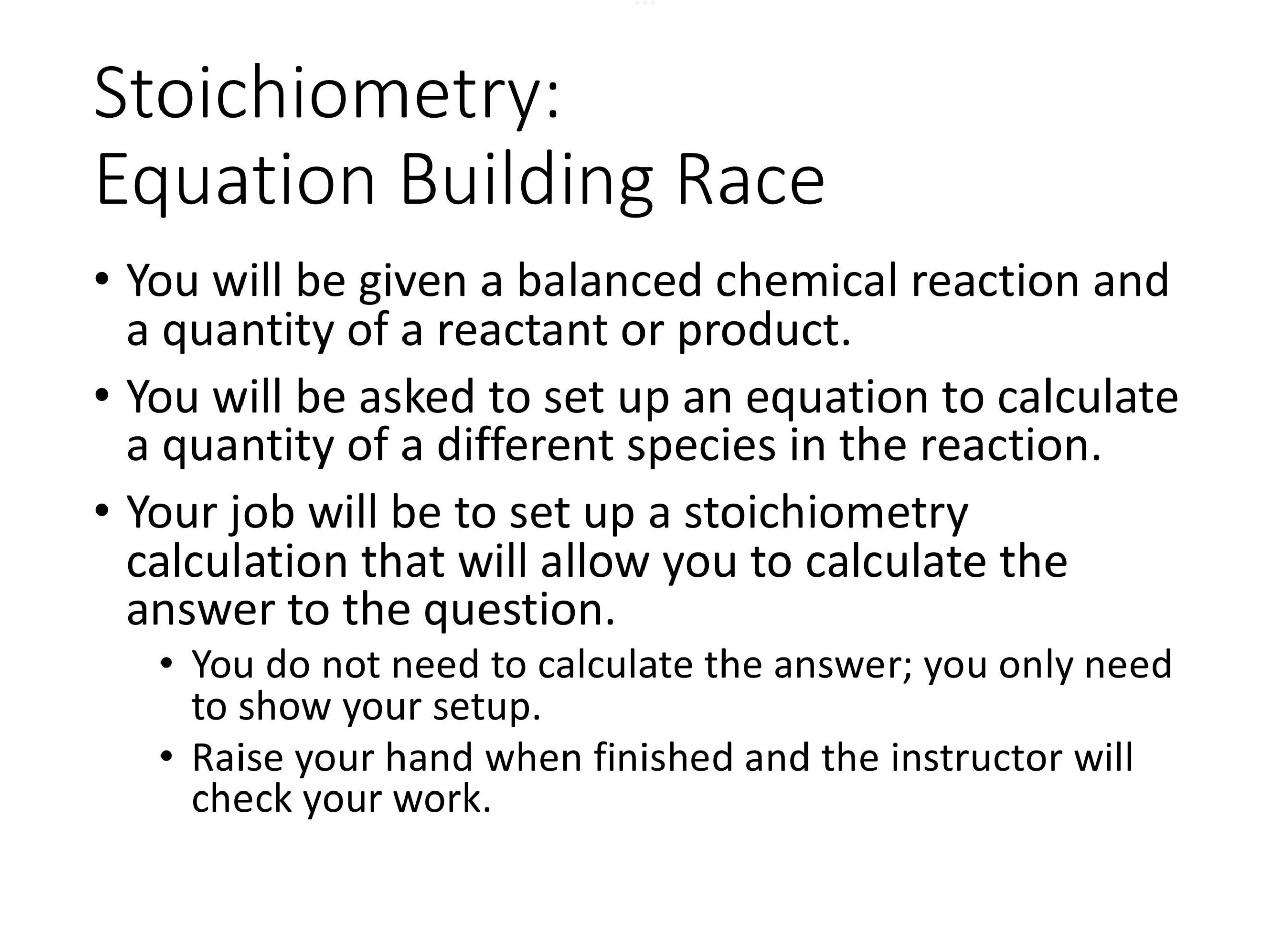
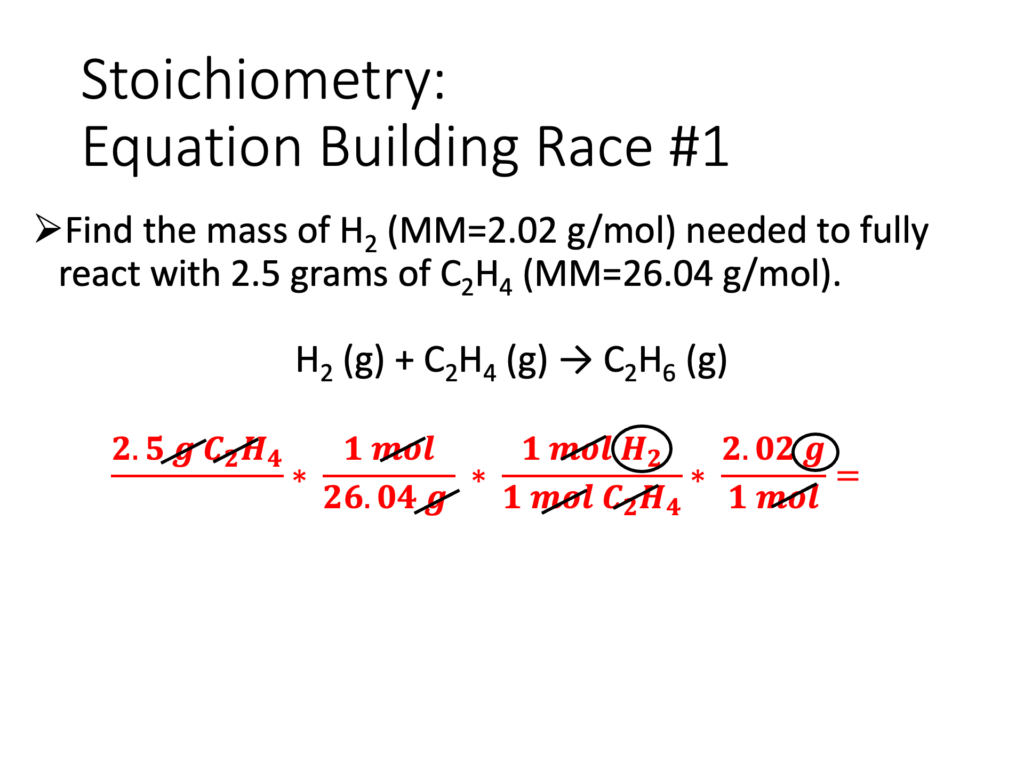
It’s often said that a chain is only as strong as a its weakest link, and this is true for any process. Only one step in a process need be erroneous for the result to be also. Therefore we sought to design games that would exclusively target specific skills involved in solving chemistry problems. If students find that they can complete each of several unrelated steps flawlessly, then when those steps are joined as the components of a problem, they’ll be able to solve it as well. And students who have difficulties will be able to better identify the steps of the process with which they have trouble.
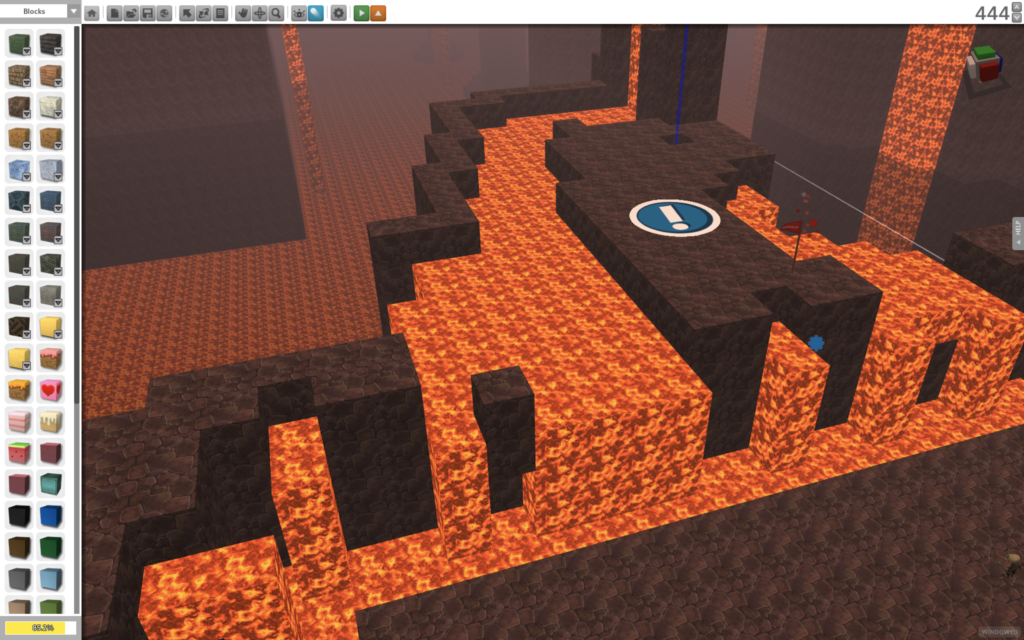
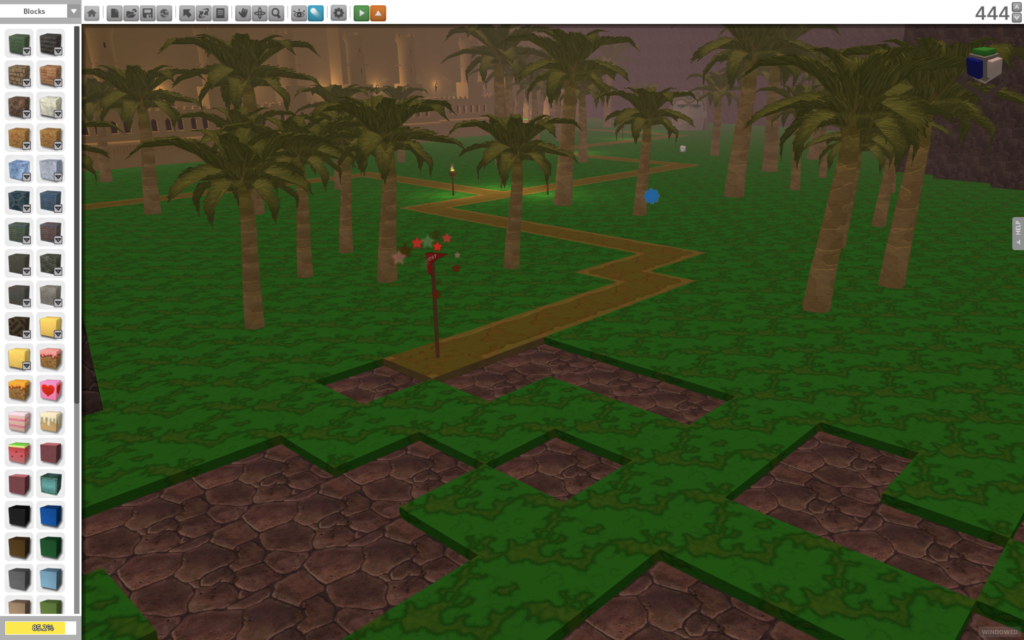
The summer following my freshman year, during which time I served as an assistant instructor for a middle school arts and science camp, I noticed similar results relating to understanding processes and taking things one step at a time. One three-week camp had students learning how to build and design basic video games using an open-source program called Atmosphere. I noticed that students roughly fell into three broad categories. Some got excited and carried away, and rather than taking things one step at a time they rushed from one thing to the next, creating games that although perhaps playable, were a convoluted mess that they later found disappointing. Others failed to learn the process itself, trying instead to imitate my demonstration step by step, and because they didn’t know the process, were at a loss when they made a mistake, causing them to keep falling behind. It was those who learned the process and took things one step at a time who finished the camp with well-designed and unique games.
Although it might have been curiosity that has driven me to pursue an education in science, it has been my process driven stepwise mentality that has helped me to succeed thus far. My time at USCL has reinforced this mentality in the ways it has challenged me academically and presented me with problems that could be solved this way during my research. The concepts taught in my calculus, chemistry, and physics classes all have in common that they seek to describe complex subjects through processes that can be taken one at a time through simple steps. By approaching difficult problems with a stepwise mentality, one can reduce an otherwise intimidating task into a more manageable sequence of steps. Even the hardest, most intimidating problems can be conquered if they are taken one step at a time.